
Zero-Click Searches: How to Get Traffic Without Website Clicks
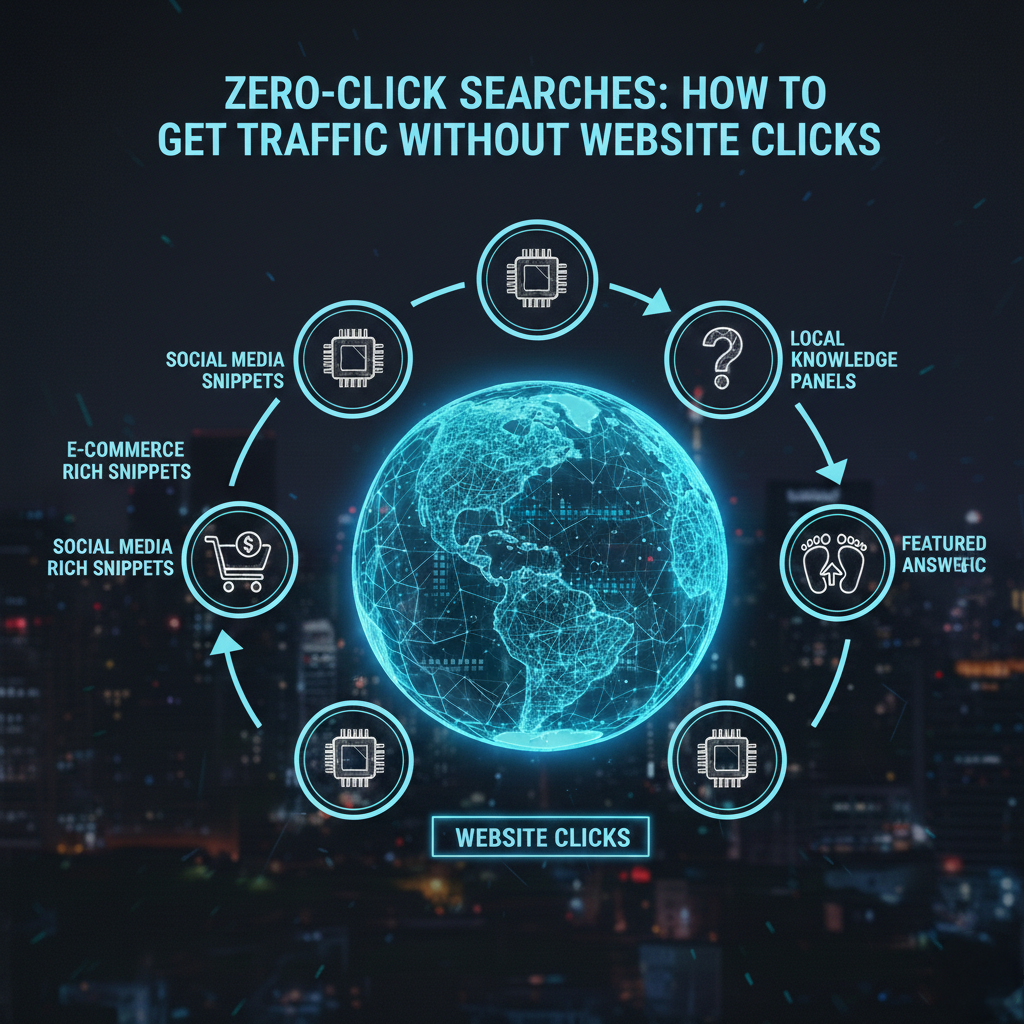
Zero-click searches are rapidly transforming the digital marketing and SEO landscape. Today, users can find answers to their questions directly on search engine results pages (SERPs) without ever clicking on a website. Whether it’s a featured snippet, Google’s AI-generated summaries, knowledge panels, local map packs, or “People Also Ask” boxes, search engines are increasingly designed to satisfy user intent instantly.
While this evolution improves user experience, it poses a major challenge for marketers and businesses that rely on organic traffic. Traditional SEO strategies focused on ranking #1 and driving clicks are no longer enough. However, zero-click searches don’t mean zero opportunity. Brands that adapt can still gain visibility, authority, leads, and even revenue—without relying solely on website clicks.
This shift requires a mindset change: instead of chasing clicks, marketers must focus on search presence, brand exposure, and intent-driven engagement.
What Are Zero-Click Searches?
A zero-click search occurs when a user’s query is answered directly on the SERP, eliminating the need to click on any result. Examples include:
- Featured snippets answering “how,” “what,” or “why” questions
- Google AI Overviews summarizing complex topics
- Local search results with directions, reviews, and contact details
- Definitions, calculations, weather updates, and quick facts
Studies show that more than half of Google searches now end without a click. This trend is driven by mobile usage, voice search, and Google’s goal of delivering faster, more efficient answers.
Why Zero-Click Searches Are Increasing
Several factors are accelerating the rise of zero-click searches. First, Google’s increasing use of AI and structured data allows it to understand content more accurately and present concise answers instantly. Second, user behavior has changed—people want fast, frictionless information, especially on mobile devices. Third, voice search and virtual assistants require direct answers rather than a list of links.
For businesses, this means less traditional organic traffic—but also more competition for visibility on the SERP itself.
How to Get Traffic Without Website Clicks
- Optimize for Featured Snippets
Featured snippets are one of the most powerful zero-click opportunities. To win them, create content that directly answers questions in a clear and structured way. Use concise paragraphs, bullet points, numbered lists, and question-based headings. Even if users don’t click, seeing your brand repeatedly builds trust and authority. - Leverage Google Business Profile
For local businesses, Google Business Profile is often more important than the website itself. Optimizing your profile with accurate information, high-quality images, updated services, posts, and customer reviews helps you dominate local zero-click searches. Many users will call, request directions, or message you directly from the SERP. - Use Schema Markup and Structured Data
Schema markup helps search engines understand your content better and display rich results such as FAQs, reviews, events, and product details. These enhanced listings increase visibility, credibility, and engagement—even if users don’t click through. - Build Brand Recognition in Search Results
When users repeatedly see your brand name answering their questions, trust builds over time. Even without immediate clicks, this recognition influences future decisions. Users may later search for your brand directly, follow you on social media, or choose you when they’re ready to convert. - Optimize for “People Also Ask” Questions
The “People Also Ask” section is another major zero-click opportunity. By answering related questions clearly within your content, you increase the chances of being featured multiple times on a single SERP, expanding your reach without additional rankings.
Measuring Success Beyond Clicks
In a zero-click environment, success metrics must evolve. Instead of focusing only on website traffic, marketers should track:
- Impressions and visibility in Google Search Console
- Brand search growth over time
- Phone calls, directions, and form fills from SERPs
- Engagement on social platforms influenced by search exposure
- Assisted conversions where search visibility played a role
These indicators show the true impact of zero-click optimization on brand growth.
Turning Zero-Click Exposure Into Conversions
Zero-click searches often represent top-of-funnel intent. Users are researching, learning, or comparing options. The goal is to stay visible throughout their journey. When they’re ready to act, they’ll remember the brand that consistently showed up with helpful answers.
To maximize conversions, align your zero-click strategy with retargeting ads, email marketing, social media content, and strong branding. This creates a cohesive ecosystem where visibility leads to trust—and trust leads to action.
The Future of SEO Is Visibility-First
Zero-click searches are not a temporary trend; they are the future of search. SEO is no longer just about driving traffic—it’s about owning attention wherever users are searching. Brands that adapt by optimizing for SERP features, AI-driven results, and user intent will thrive, while those clinging to outdated click-focused strategies will struggle.
By embracing zero-click searches and redefining what “traffic” means, businesses can turn reduced clicks into increased influence, stronger brand presence, and long-term growth in an evolving digital world.